
Sex Offender Checks in Polk County
The Texas Public Sex Offender Registry is the main public source for Polk County. Texas DPS runs the statewide portal. Local registration authorities supply and verify facts within their jurisdictions, while DPS publishes the central search. No separate Polk County registry search or appointment page was confirmed, so use the state portal and call the Sheriff at 936-327-6810 for local registration-office hours or suspected noncompliance.
A name search works when a likely identity is known. A county, city, ZIP, address, or map search works better for place-based awareness. Use both when practical. Names can change, an address can fall just outside a radius, and a result may reflect an older verification date. The official profile, not a copied list, should guide the next check.
Polk Registry: Local and State
Polk County's local authority handles registration and verification duties for people within its jurisdiction. The official Sheriff page supplies the local agency route, while Polk County government maintains the department directory. Texas DPS keeps the public statewide layer. A question about local check-in hours belongs with the Sheriff, while a public name or map search belongs on the DPS portal. A suspected failure to report an address change should be sent to law enforcement rather than resolved through personal contact.
Major reporting events generally must be supplied within seven days under Articles 62.051 and 62.055, including changes described by the statute. Verification frequency can be annual or more frequent for certain categories. A recent move can therefore involve a local report, agency processing, and statewide publication at different moments.
Note: Local verification and statewide display are linked processes, but they may not update at the exact same moment.
How to Search the Texas Public Sex Offender Registry
The Texas registry supports both identity and geography searches. Select Polk County for a broad county view, or use a city, ZIP, address, and radius for a tighter area. Around Lake Livingston, city labels and postal boundaries do not always match the place someone has in mind, so a map view and more than one nearby location can improve coverage.
- Open the official Texas DPS registry and review its conditions and lawful-use notice.
- Choose a name search or enter an address, city, Polk County, ZIP code, and available radius controls.
- Review the list or map, then compare names, aliases, photos, and physical details before treating a result as a match.
- Open the full profile and read the registration status, verification date, address, offense, and reporting authority.
The official Texas registry interface shows the live search modes used for Polk County sex offender records.
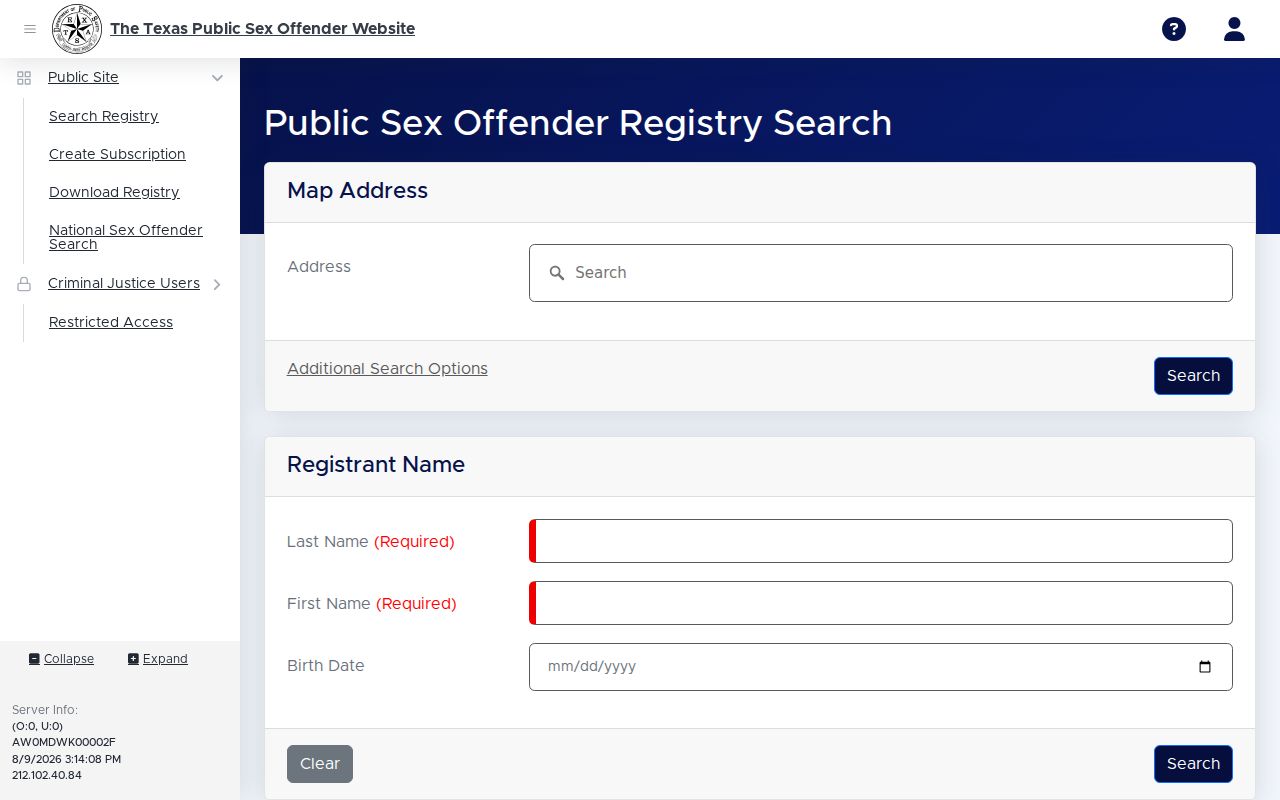
The search screen is only the first step. Open the current profile and read its dates and status before drawing a conclusion.
| Field or control | Type | Required | Use |
|---|---|---|---|
| Last name | Text | Depends on mode | Starts a name search; variants and aliases can matter. |
| First and middle name | Text | No | Narrows common-name results. |
| Address | Text | Address mode | Sets the center point for a proximity search. |
| City, county, ZIP | Text/select | Geographic mode | Select Polk or a local place such as Livingston, Onalaska, or Corrigan. |
| Radius | Select | Address mode | Uses live portal distance choices around the entered point. |
| Map or list | View control | No | Changes how geographic results appear. |
No Polk Registry Result Is Proof
A no-result Polk County sex offender search is not a safety guarantee. The spelling may differ, a person may be listed under an alias, a radius may stop before the relevant address, or a recent update may still be moving through the reporting system. Out-of-state history and nonpublic juvenile relief can also affect what the Texas public portal shows.
Repeat the search with name variants and a broader place filter. Check the map and list views. If the concern crosses Texas borders, use the national layer. For an address that seems stale, note the profile's verification date and contact the Polk County Sheriff rather than confronting anyone. The agency can assess whether the entry reflects a reporting issue or ordinary publication timing.
Inside a Registry Profile
A registry profile groups identity, place, offense, and compliance fields. Each field has limits. A photograph can age. A primary address can change. A risk level is an assessment category, not a prediction. Read the profile as a dated official record and use its reporting authority when a fact needs confirmation.
| Name and aliases | Shows the published identity and known variants used to match search results. |
|---|---|
| Photo and description | May include sex, race, height, weight, hair and eye color, plus scars, marks, or tattoos. |
| Registered location | Lists primary or secondary address information as the portal lawfully displays it. |
| Offense record | Can show description, statute, jurisdiction, conviction or adjudication date, and authorized victim category. |
| Risk level or status | May show a Texas numeric risk level, civil commitment designation, and compliance information. |
| Registration details | Shows verification date, duty information, and the reporting authority when published. |
The Texas DPS profile layout places these fields together on the public record.
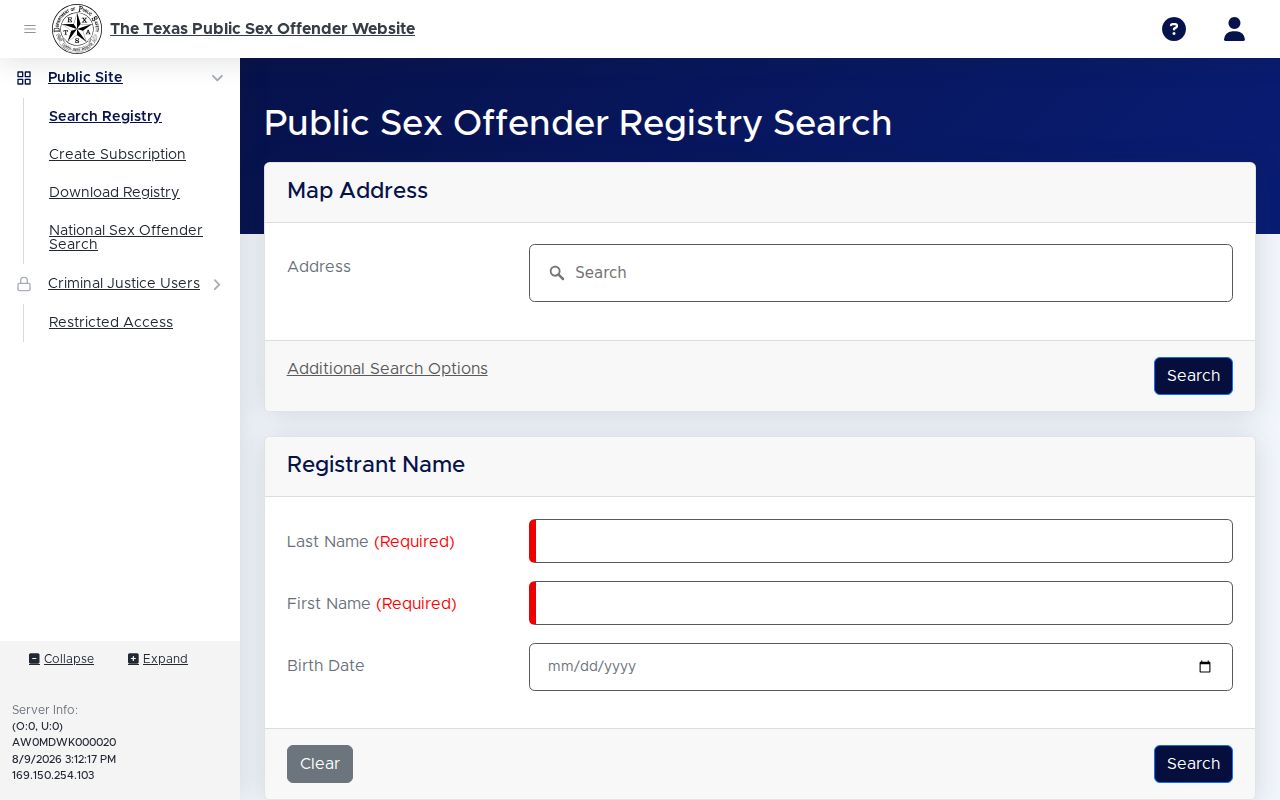
Comparing the status and verification date with the address and offense fields gives a fuller view than the result-list row alone.
Polk Registry Searches Through NSOPW
The National Sex Offender Public Website searches participating jurisdictions across the country. It adds value when a person may have moved across state lines or when the geographic concern extends beyond Polk County. It does not replace the Texas source for reading a current Texas profile or contacting the local reporting authority.
The official NSOPW search presents the national cross-state access layer.
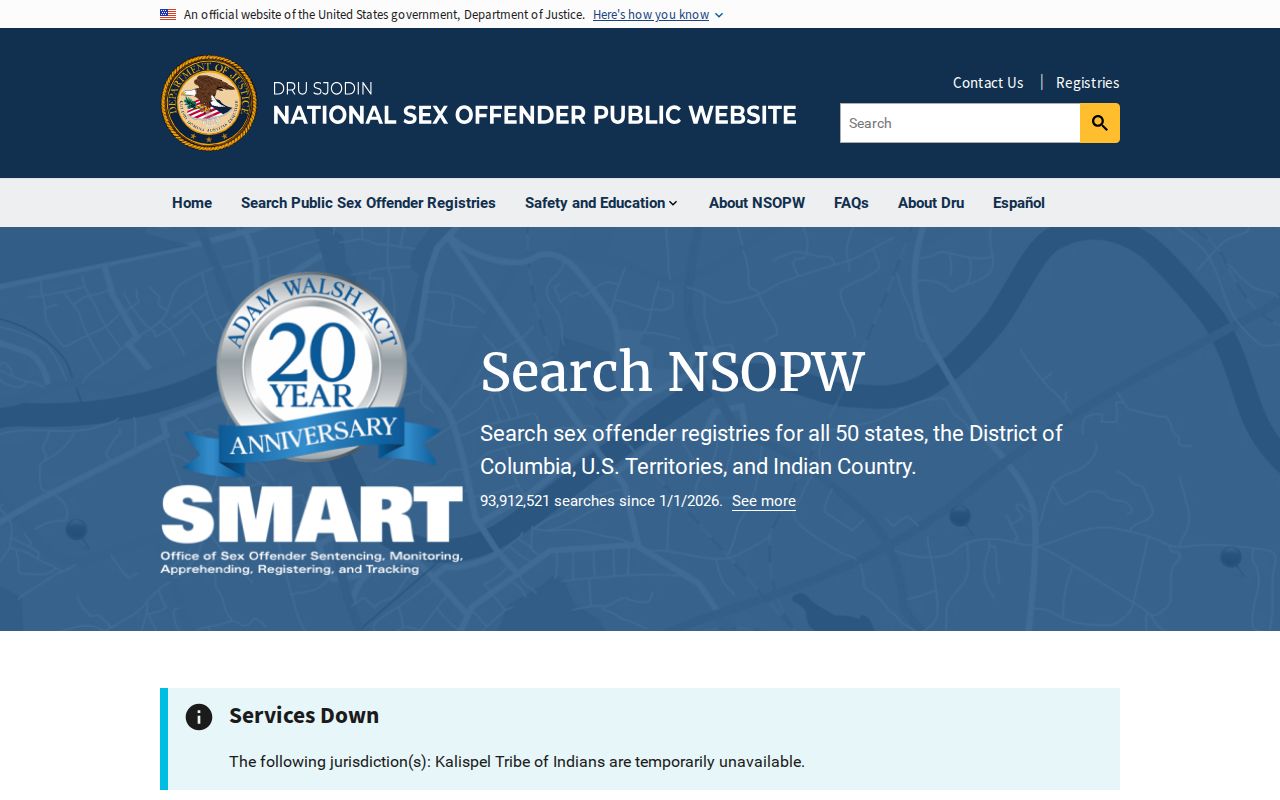
Use a national hit to return to the named jurisdiction's official registry, where current fields and local reporting contacts can be checked.
Search conditions and participating-source updates still apply. A national no-result carries many of the same limits as a state no-result, including spelling, timing, and records that are not part of the public layer.
Texas Registration Levels and Requirements
Texas uses numeric risk levels 1, 2, and 3, plus a civil commitment designation in relevant cases. These are not federal SORNA tiers. Registration duration is driven chiefly by the reportable offense under Article 62.101. The main periods are ten years after release or discharge for listed outcomes and lifetime for listed serious or repeat outcomes. Juvenile rules, exemptions, and early termination can differ.
| Texas concept | Duration or duty | Verification and meaning |
|---|---|---|
| Risk Level 1 | Offense-driven | Low assessed danger; not a safety guarantee. |
| Risk Level 2 | Offense-driven | Moderate assessed danger; use current profile dates. |
| Risk Level 3 | Offense-driven | High assessed danger; notification may be broader. |
| Ten-year duty | Generally after release or discharge | Applies to listed reportable outcomes; often annual verification. |
| Lifetime duty | Lifetime for listed serious or repeat outcomes | Frequency can include every 90 days for certain categories. |
| Civil commitment | Separate statutory status | Do not treat it as an ordinary conviction tier. |
Always check the profile and statute for the individual duty. The risk number alone does not determine the ten-year or lifetime period, and a federal 10/25/life chart does not state Texas law.
Report Polk Registry Concerns
Call the Polk County Sheriff at 936-327-6810 to ask for local registration-office hours or to report suspected noncompliance. For a releasable local record, use the county's official public-information request channel. Provide the profile link, the fact that appears inconsistent, and the date observed. Law enforcement can compare that information with nonpublic reporting and verification records. Personal visits, threats, and public accusations are unsafe and can violate the law.
A changed address does not by itself show a crime. Texas reporting rules include set time frames and agency processing, and the public display may lag. Focus on clear facts, preserve the official profile date, and let the responsible authority assess compliance.
Polk Registry: Ten Years or Life
Article 62.101 contains the offense-based duration rules behind the ten-year and lifetime duties. It should be read with the qualifying offense, release or discharge date, juvenile status, and any lawful exemption or early-termination order. A quick label on a result screen cannot replace that review.
The official Texas Chapter 62 text supplies the registration, update, duration, and misuse rules.
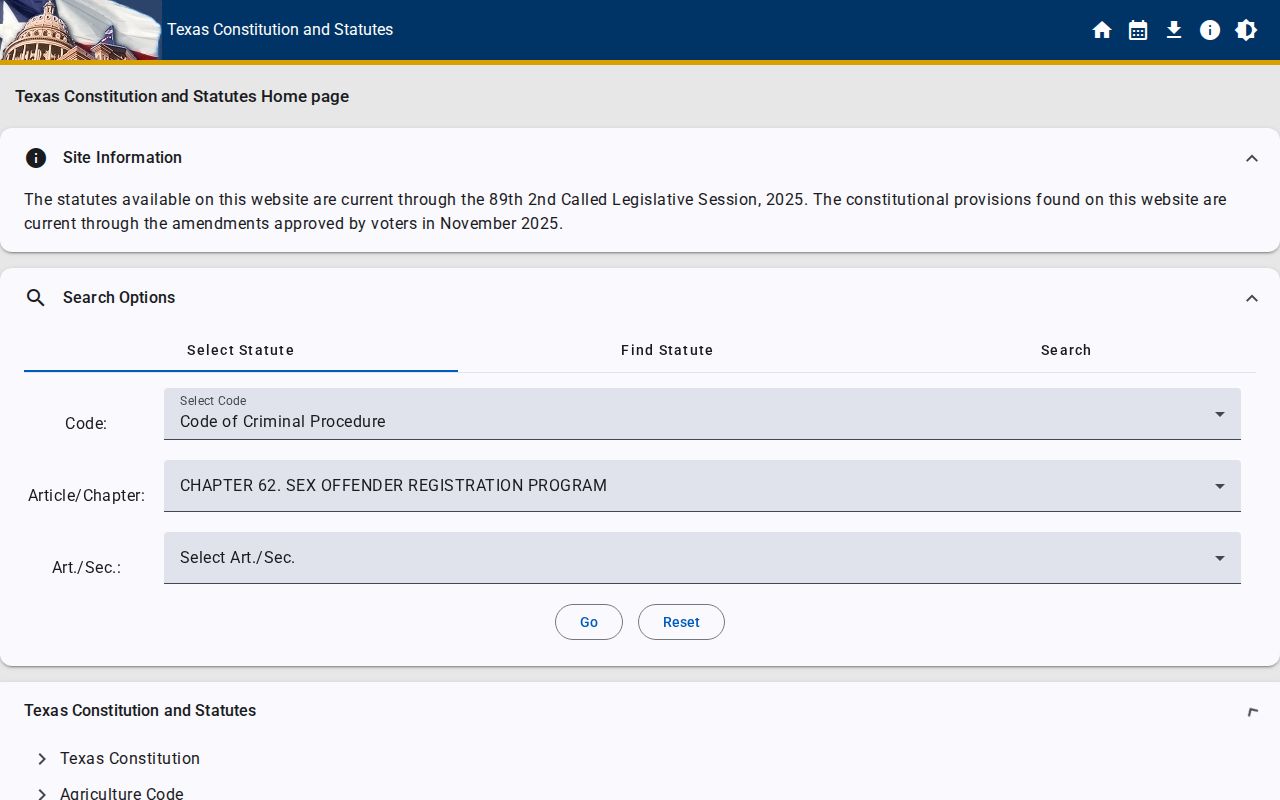
The statute connects the public profile to the legal duty, while the Polk County authority handles local verification and suspected violations.
Community Notification and Lawful Use
Registry information supports personal and community awareness. Use verified facts to plan reasonable safety steps, discuss age-appropriate boundaries, and contact law enforcement about a concrete concern. A risk level and address are not permission to confront, follow, threaten, or punish a listed person or anyone in the household.
Registry misuse can be a crime: Texas Code of Criminal Procedure Article 62.063 prohibits using registry information to injure, harass, or commit a crime and provides penalties for misuse.
DPS also warns that data comes from local authorities and may change. Confirm the live profile before relying on a copied or saved result. Report an apparent error to the proper agency so it can be checked through official records.